My simulation takes too long
Surrogate models that respond in milliseconds, checked against the real simulation.
View the project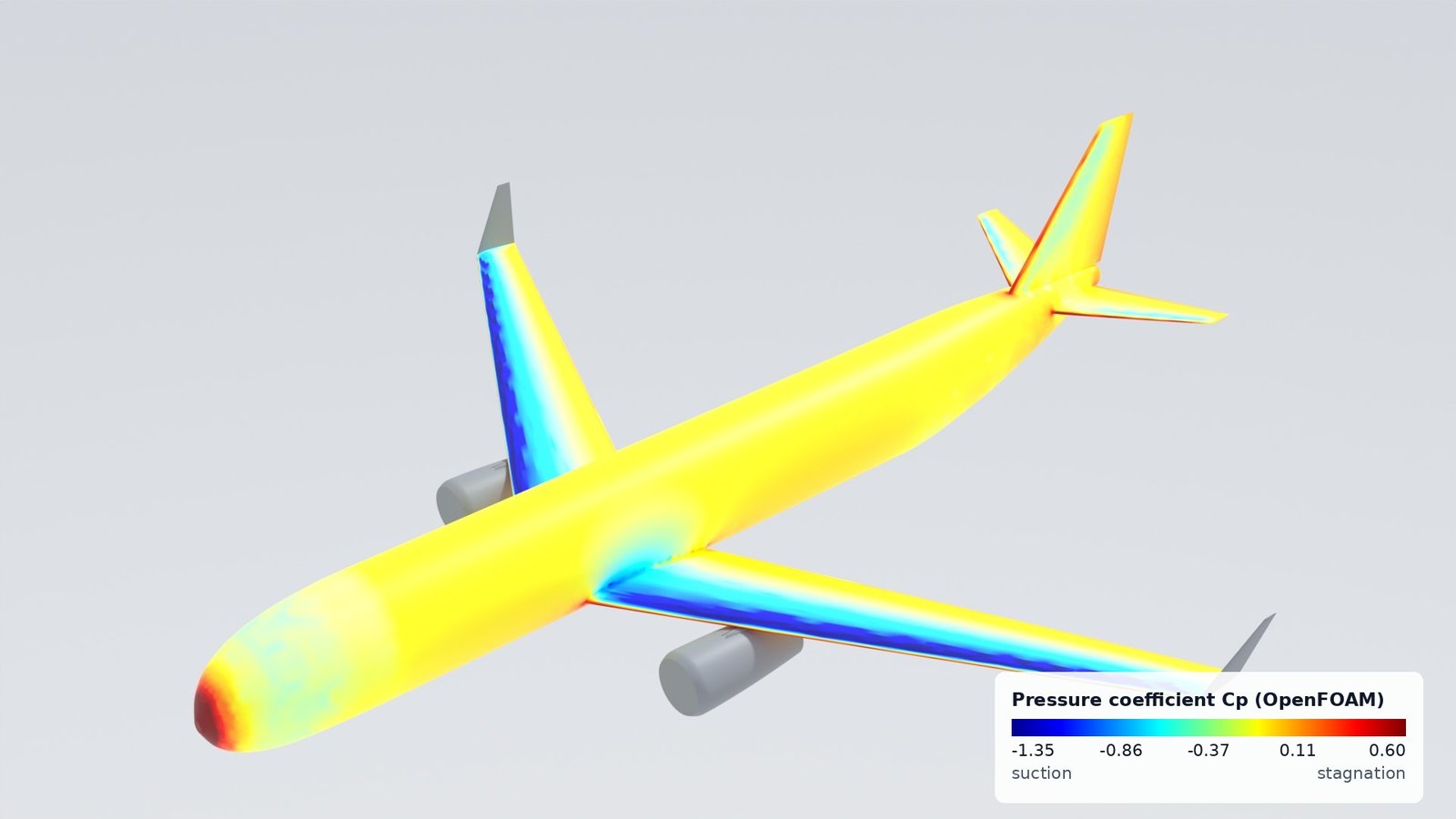
ChordIQ · Our work
Faster simulations without losing the physics.
We turn engineering cases into fast, physical and verifiable models. Every result is checked against the reference simulation with measured error — so you can decide in time, with evidence.
Initial 30-minute diagnostic, under NDA and free of charge.
Surrogate models that respond in milliseconds, checked against the real simulation.
View the projectOptimization with real trade-offs and criteria for every rejected design.
View the projectComparison, mesh quality and verification before a decision.
View the projectDigital twins and inverse problems to estimate unmeasured fields and parameters.
View the projectSee it in action
1,920 single-aisle aircraft designs evaluated, with candidates outside certification criteria discarded and selected designs checked in 3D CFD. Calibrated on the A320 first, then optimized: up to 13% less CO₂ per passenger-km while remaining within the 36 m airport-gate limit in the published study.
It can be too slow for a decision, a design sweep or real-time operation.
It can ignore physics and return a plausible but wrong answer. Without a reference, there is no way to tell the difference.
Physics constrains. Data calibrates. Validation decides.
Portfolio · 13 projects
Engineering tools that combine physics and AI, from thermal sizing to aircraft design.
Aerospace & optimization
1,920 commercial aircraft designs evaluated, with candidate selection and 3D CFD verification.
CFD · NSGA-II · Optimization
Thermal & inverse problems
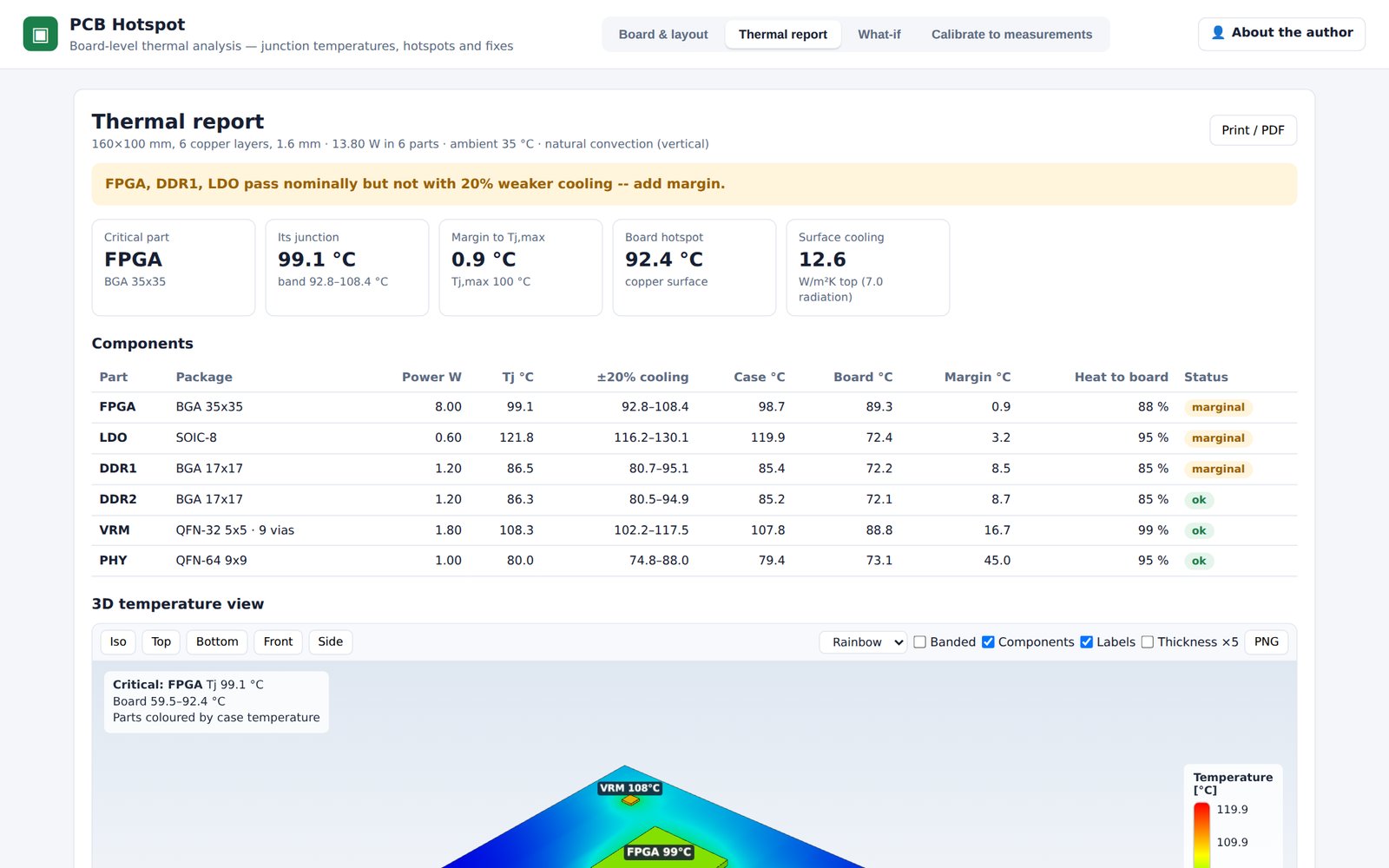
Junction temperature for every board component in about one second.
Electronics · Calibration · EKI
Thermal & inverse problems
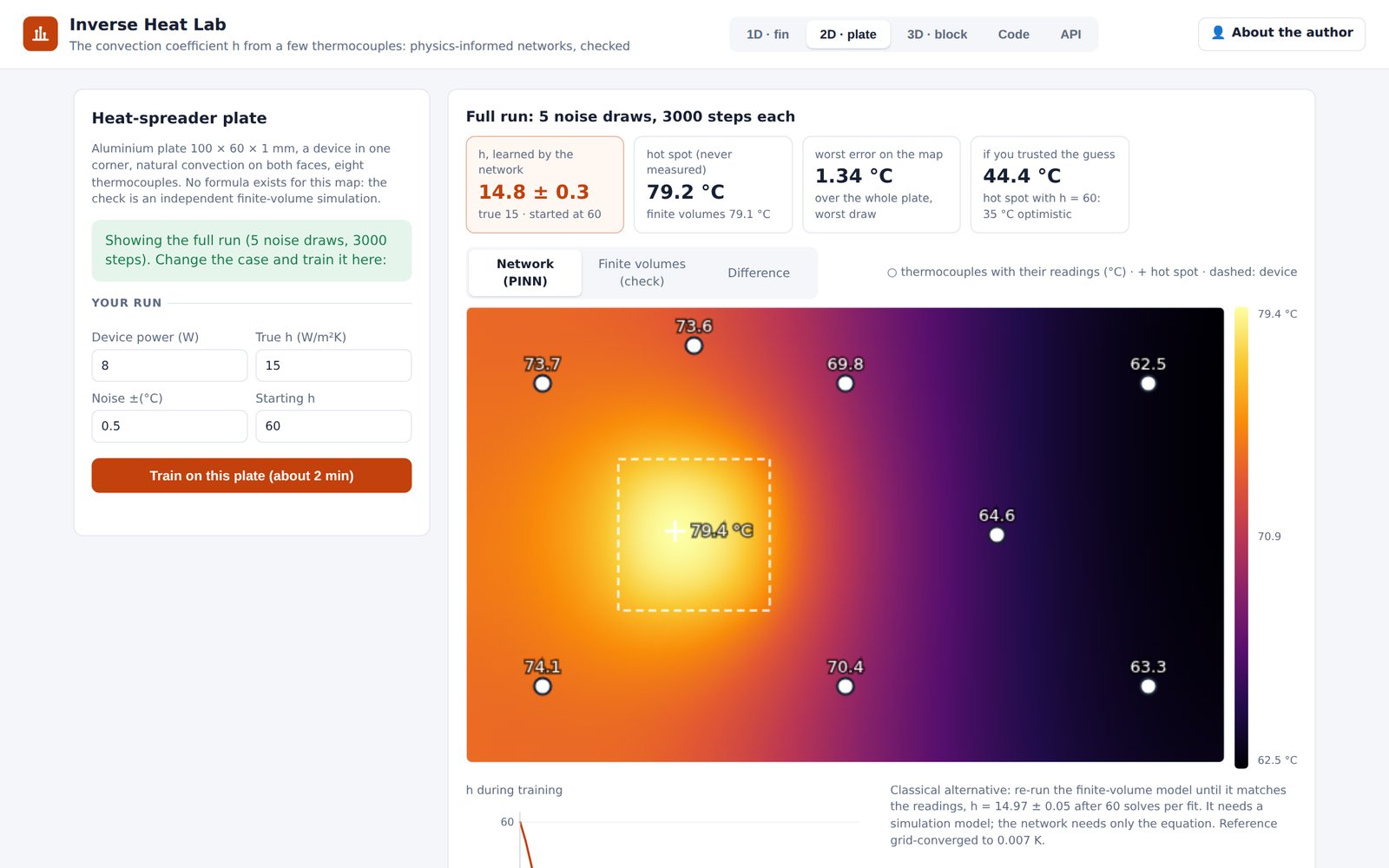
From a few thermocouple readings to the heat transfer coefficient, the full field and unmeasured temperatures.
PINN · Inverse problem · Thermal
Thermal & inverse problems
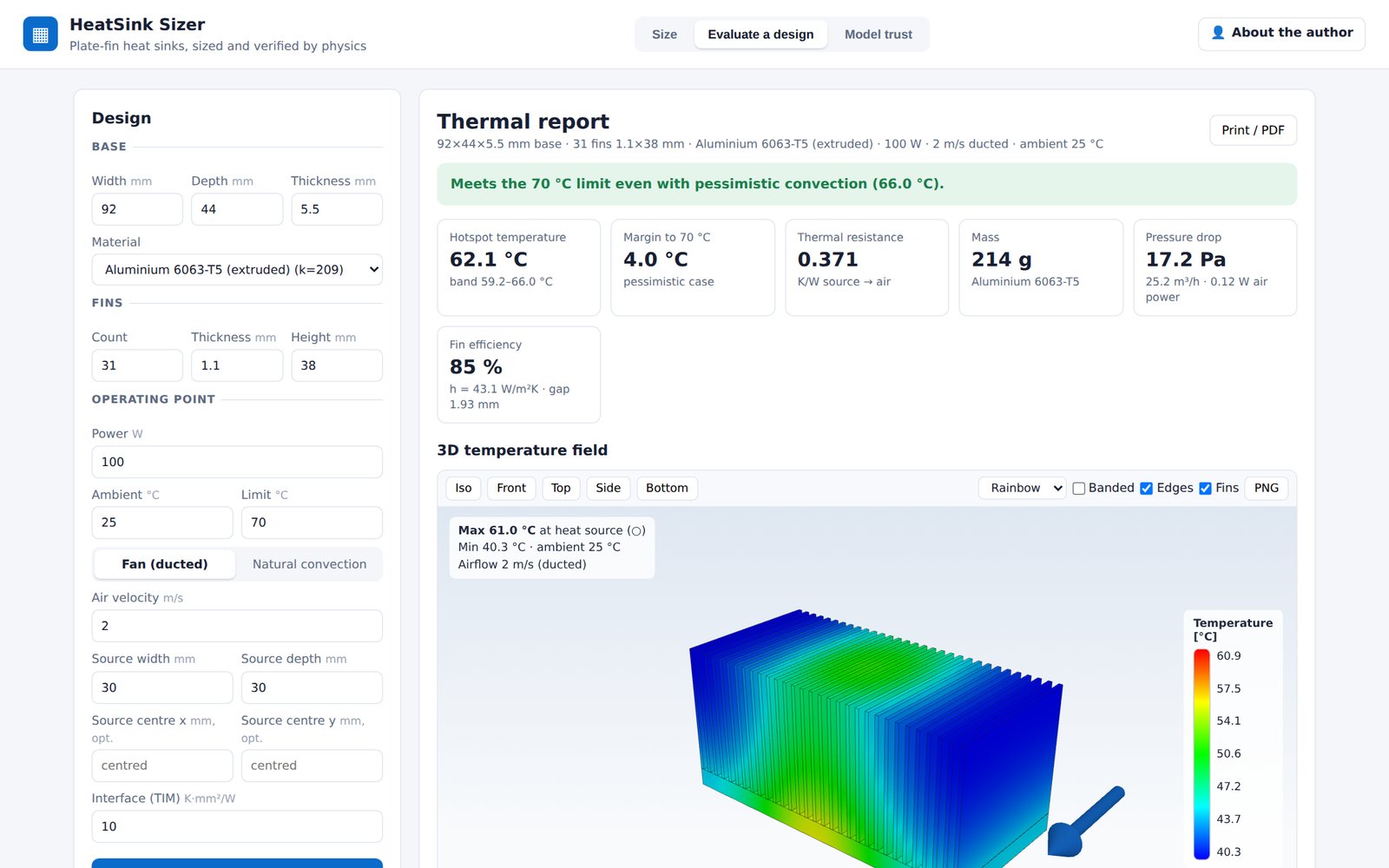
Heat sink sizing in seconds, with confidence explicitly stated.
Thermal · Neural surrogate model
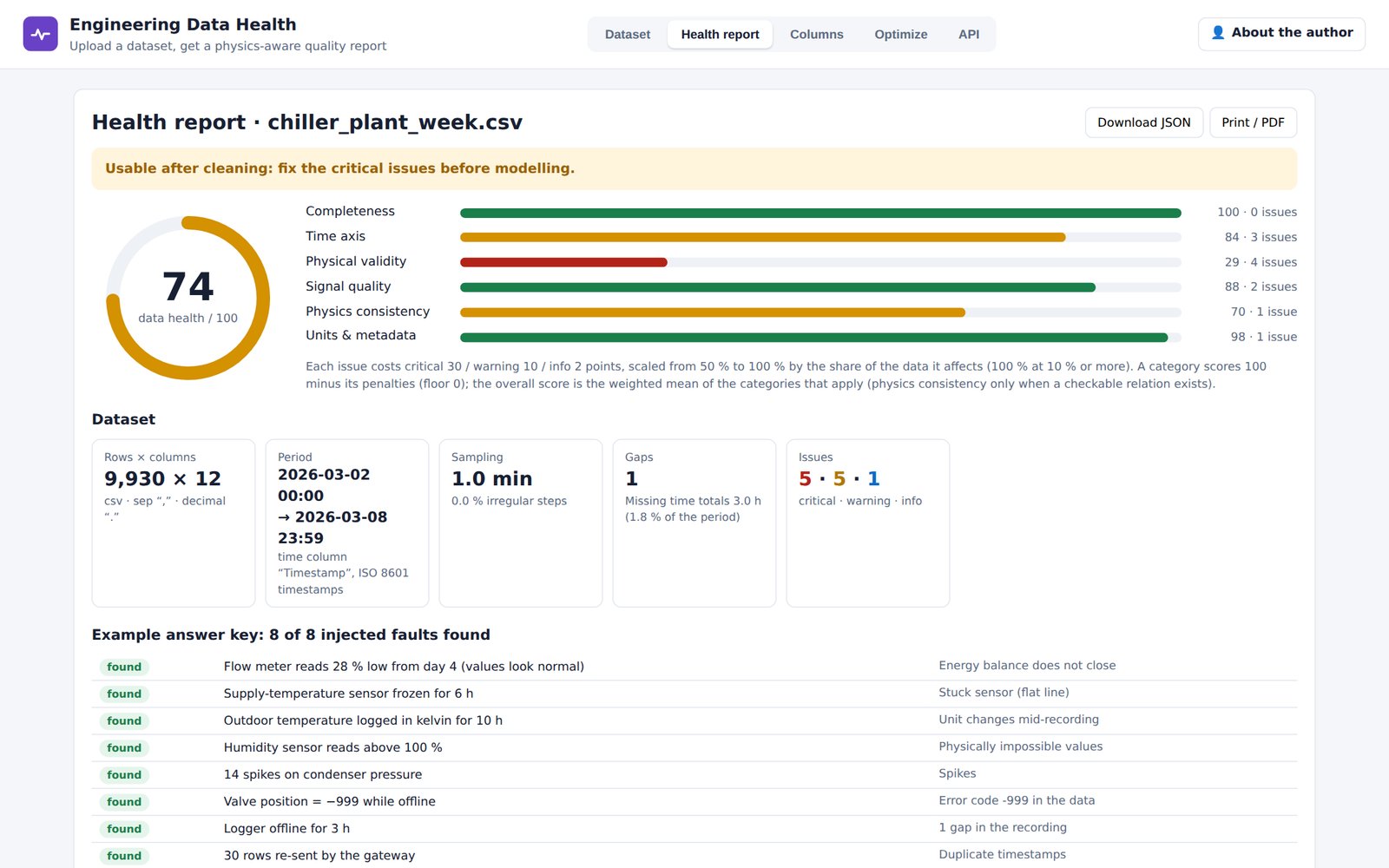
Industrial data
Plant data diagnostics before bad data can contaminate any model.
Data quality · Energy efficiency
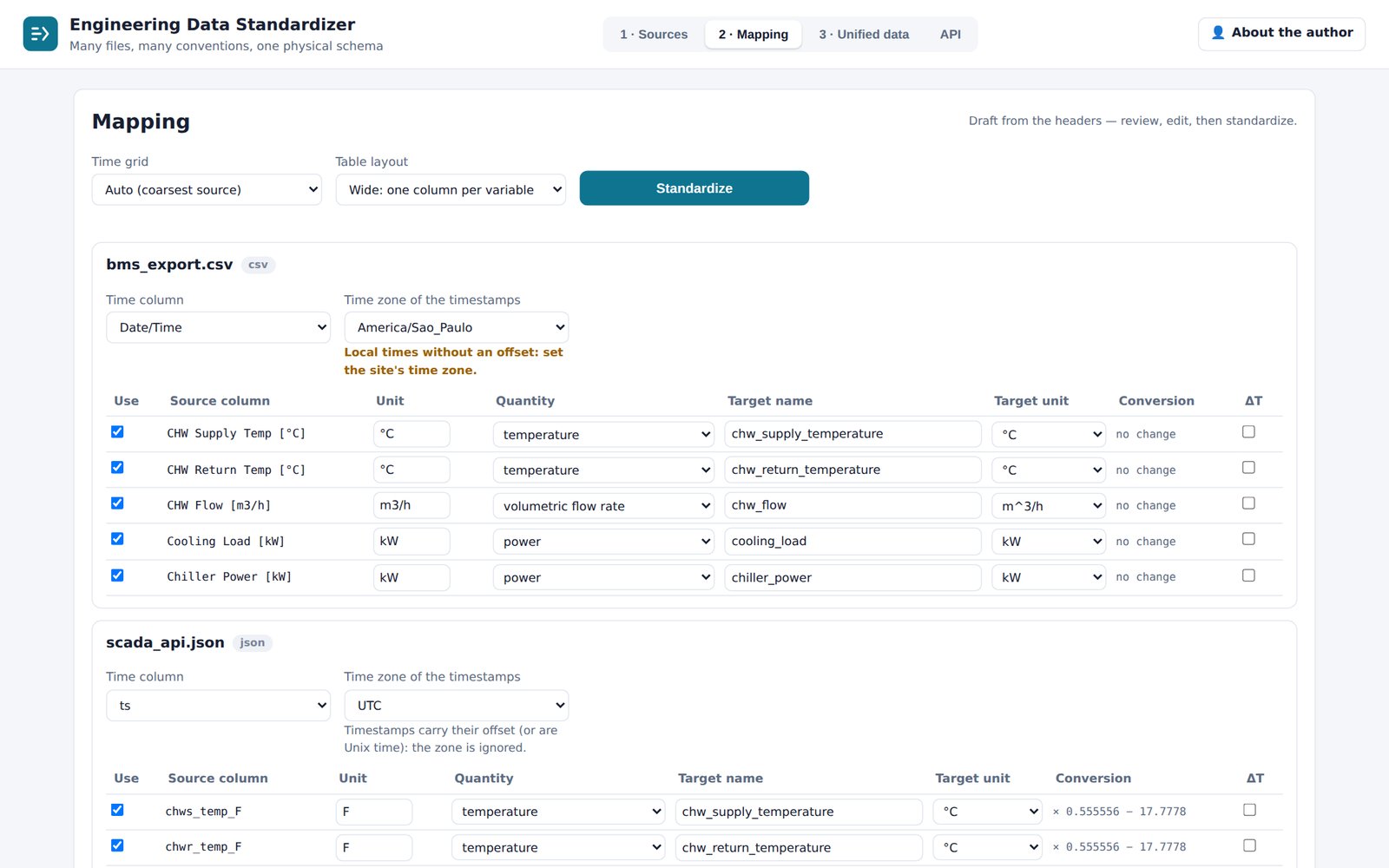
Industrial data
Multiple sources in one clean table, in UTC and with consistent units.
Interoperability · Industrial data
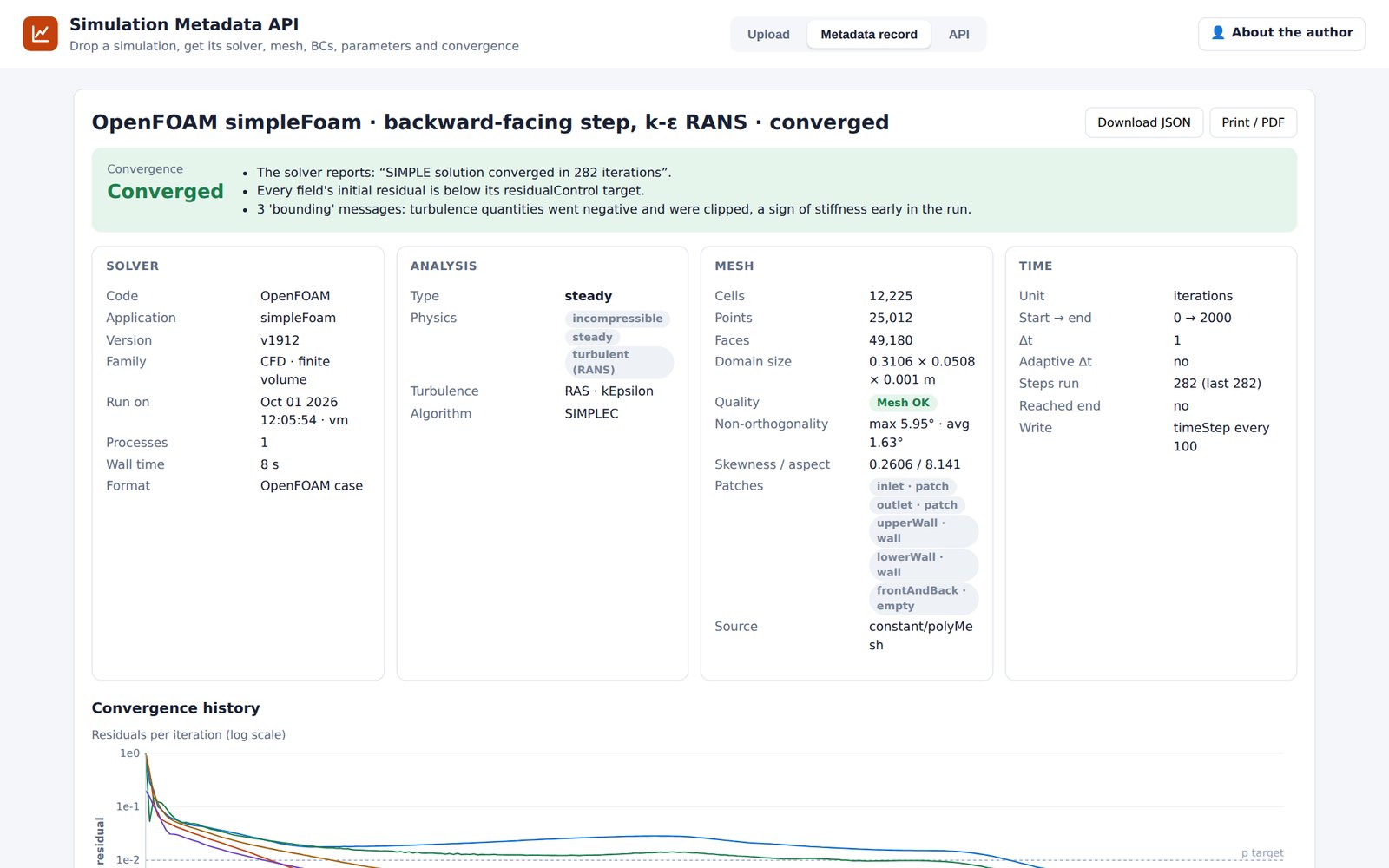
Industrial data
A structured record of every simulation: what ran and whether it converged.
CFD · FEA · Traceability
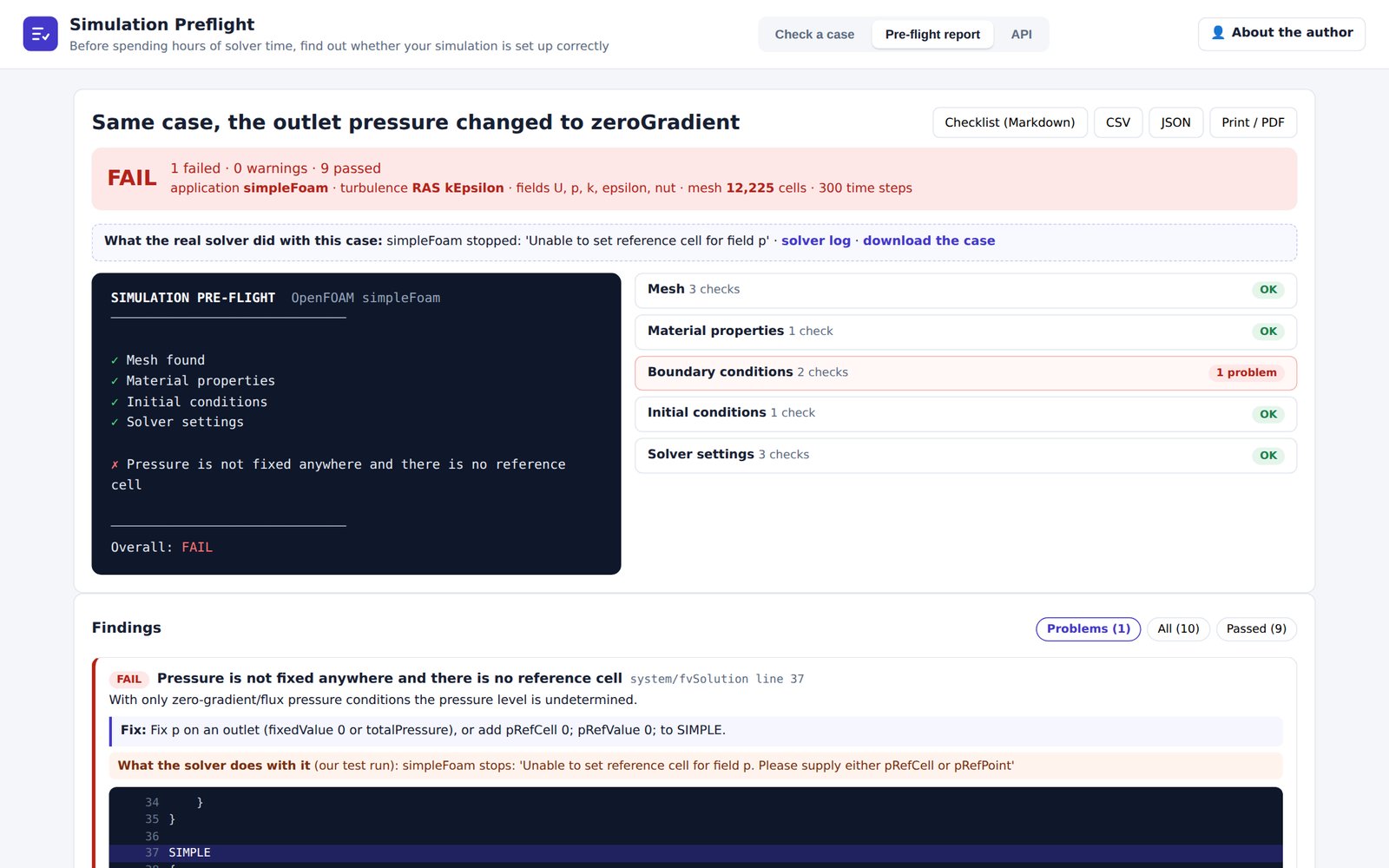
Simulation & mesh
Case issues identified before the simulation runs.
CFD · FEA · Quality
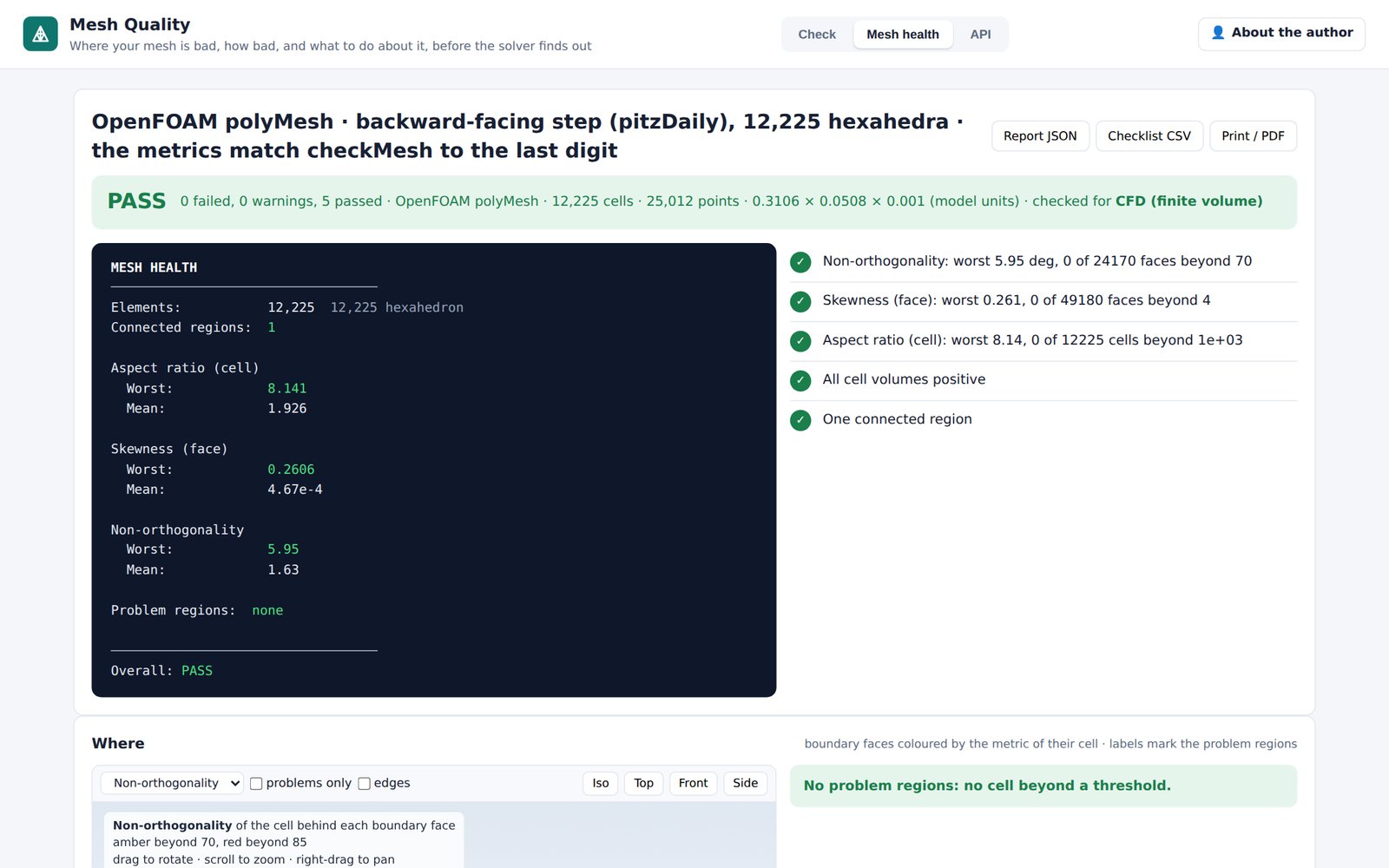
Simulation & mesh
Mesh quality assessment and identification of where its defects are located.
Mesh · CFD · FEA
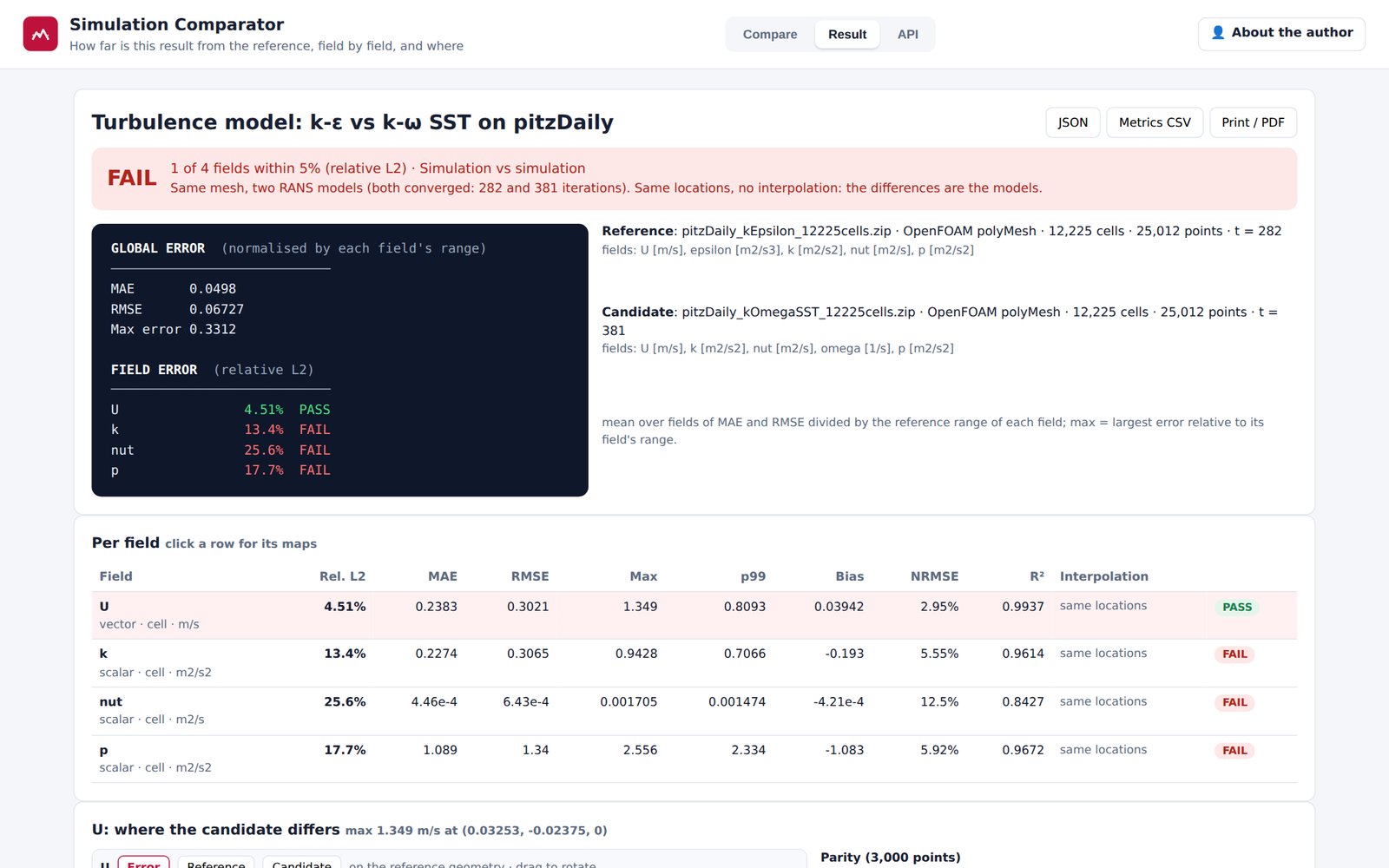
Simulation & mesh
Comparison of two results, field by field and point by point.
Verification · Validation
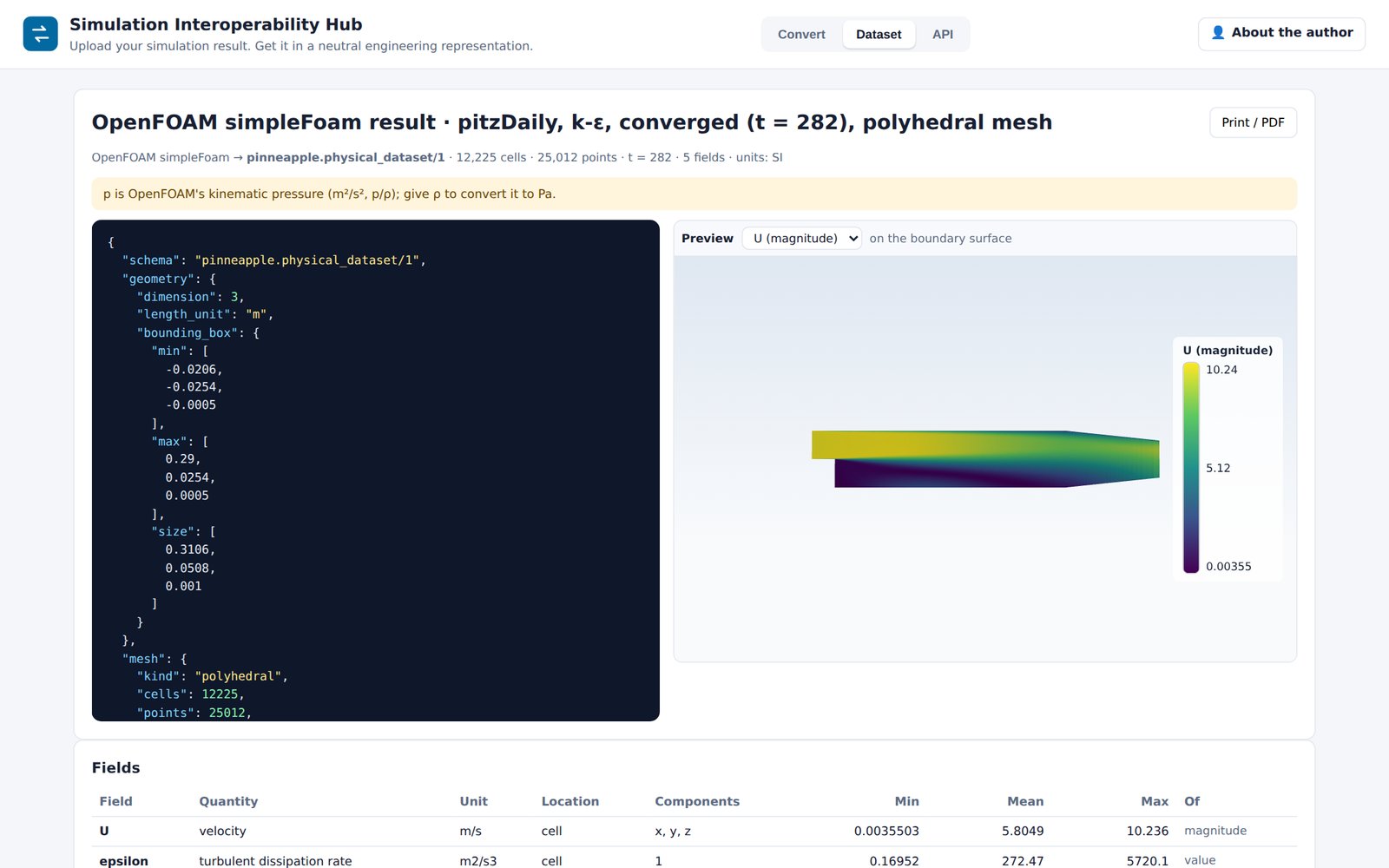
Simulation & mesh
Simulation results in a neutral dataset without losing units.
Interoperability · CAE
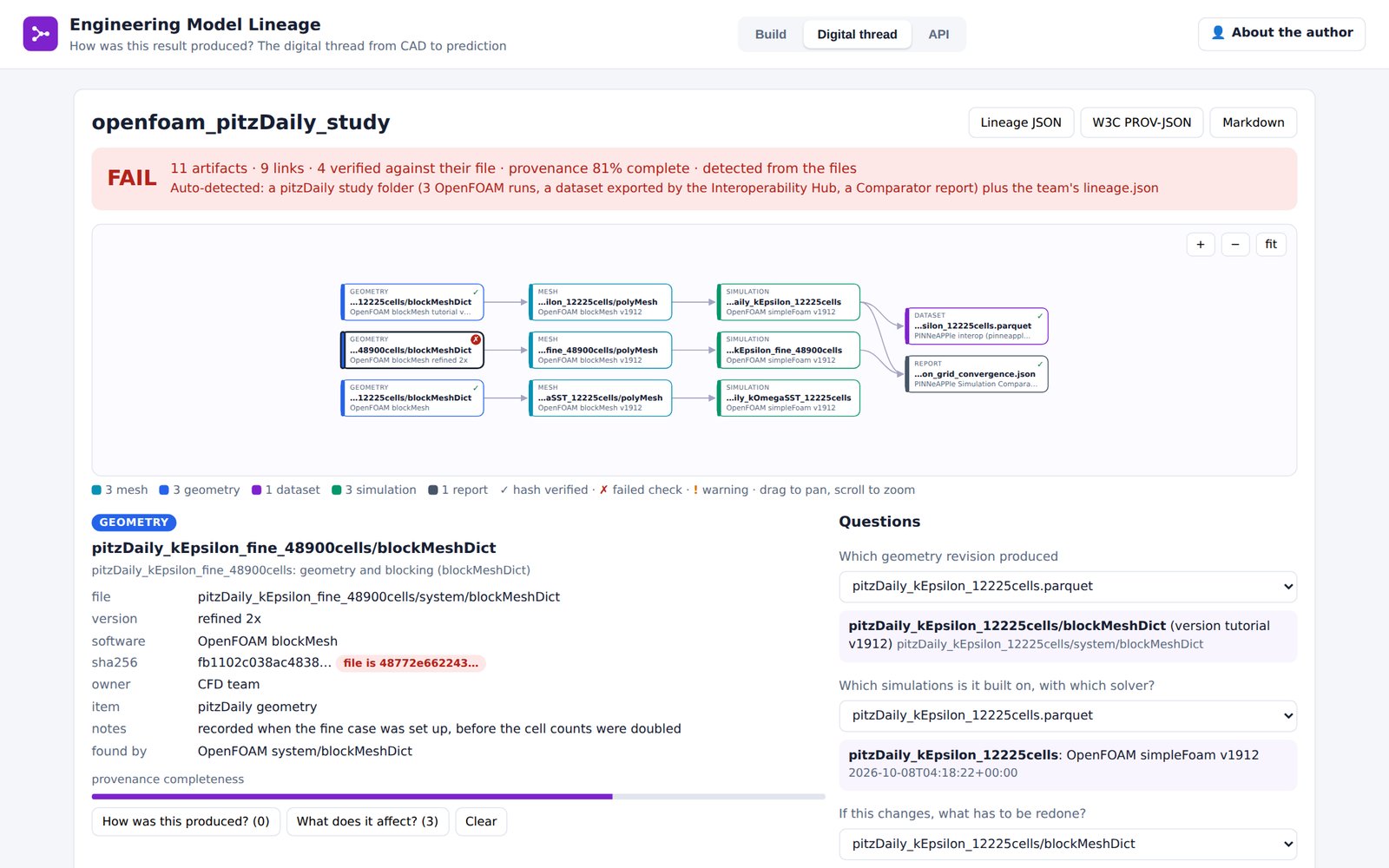
Documents & traceability
Traceability from the geometry revision that generated each prediction.
Traceability · Digital thread
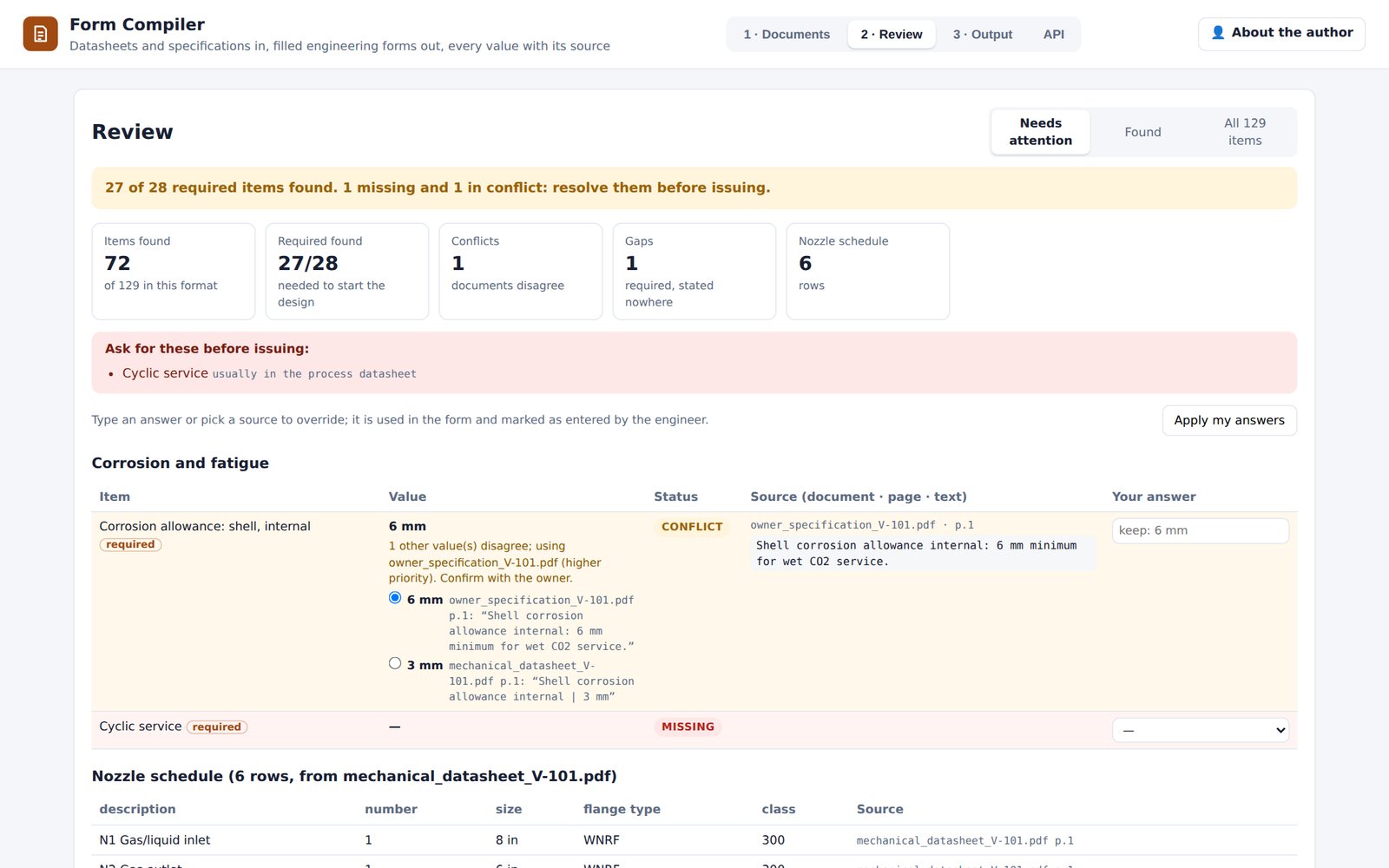
Documents & traceability
Datasheets and specifications become completed forms, with the source of every value.
Documents · OCR · Process design
Engineering applications
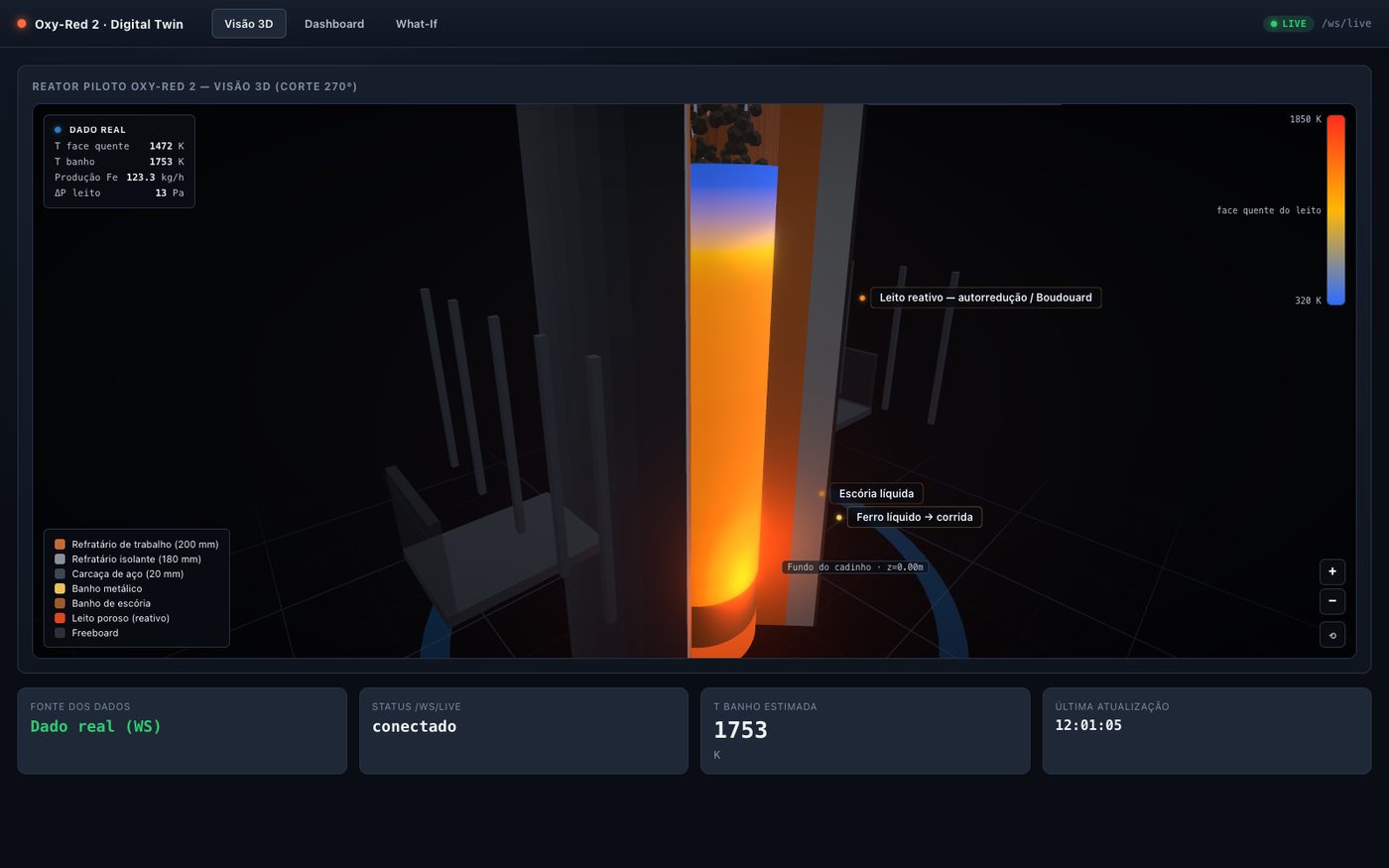
Connected models, data and sensors turn physical processes into useful information. The visual reactor prototype demonstrates this approach; by itself, it does not represent validation in a plant.
CFD + surrogate models
OpenFOAM simulation to predict wear, using the case geometry and a trained surrogate model to respond to scenarios in seconds.
Digital twins + soft sensors
Physical models and AI applied to plant data to estimate what is not measured, check mass balances and support operating-point selection.
Engineering optimization
Models learn component physics and guide geometry exploration. Every result is checked again against the physical reference.
Operational AI
Searchable memory of episodes and decisions to suggest procedures with explicit confidence. No operational action is executed without human authorization.
Physical verification and uncertainty
Physical consistency, numerical convergence and uncertainty in a report that distinguishes what was checked from what was not. A check that was not run never becomes a fabricated score.
Data assimilation
Physical models and real readings combined through an ensemble Kalman filter to correct forecasts without instrumenting the entire plant.
Mining · Oil and gas · Energy · Aerospace · Automotive · Process industry
We work where the cost of a modeling error is high. The technology is horizontal; experience is applied case by case, without promising equal depth in every industry.
15 published technical studies
Results measured against experiments, solvers or known references. The numbers belong to the cases and regimes described; they do not guarantee performance in every application. The global weather-forecasting study is still in progress.
Our principle
When a classical numerical method is faster and more accurate than a neural network, we recommend the classical method. That is what happened in the rover-mobility case. The best solution is the one that solves the problem with rigor.
01
A solver, governing equation or known experiment — never an invented target.
02
Error measured on data not seen during training, against the reference.
03
Intervals, margins and application limits made explicit.
04
Time, cost, accuracy, safety or performance — not accuracy in a vacuum.
How we work
01
Closed scope and success metric defined before development.
02
We understand the team's methodology and structure the available data.
03
Physics and machine learning to predict, simulate and optimize scenarios.
04
Comparison with the current method, with gains measured against the agreed metric.
Open technology, applied engineering
Created by Yan Barros, a physicist by training, PINNeAPPle brings together physics, AI and engineering. ChordIQ turns this open foundation into verifiable engineering systems, with experience in industrial applications, climate, agribusiness and solar astrophysics.
Contact
Tell us about your case. We will define a fixed-scope pilot and a measurable success criterion, with no commitment.